
How to Apply The Power of Habit
Reading time about 5 min
- Published
Charles Duhigg’s book The Power of Habit: Why We Do What We Do in Life and Business treats a habit as a loop in which a cue prompts a routine and a reward teaches the brain that the sequence is worth remembering. Its useful invitation is not to blame yourself or erase an old behavior by force. It is to identify what starts the behavior, discover what you are actually seeking at the end, and try another routine that can deliver a similar reward. Color Your Habit cannot diagnose that loop or prove that a behavior has become automatic. It can give the replacement routine a clear name, preserve the days when you tried it, and make the conditions around repetition easier to review. Begin gently: understand one loop, test one realistic alternative, record it after the action, and stay curious about what the result tells you.
Observe the habit loop you want to change
Choose one behavior and spend a few days observing it before trying to fix it. Duhigg’s reader’s guide to changing habits suggests noting five cues: location, time, emotional state, other people, and the action immediately before the routine. If you buy a cookie every afternoon, hunger may not be the reward. You may want a short break, a change of scenery, or a friendly conversation. At the usual time, try water, a walk, or talking with a coworker, then notice whether the urge changes. The goal is not to guess correctly at once. It is to collect enough clues to see a loop that used to pass automatically. If the behavior involves addiction, an eating disorder, or another health concern, use professional support rather than relying on a tracker alone.
Put a new routine between the cue and reward
The book’s Golden Rule of Habit Change keeps a familiar cue and reward while replacing the routine between them. Instead of simply resisting, decide what you will do when the cue arrives and which need it should serve. This is not a guaranteed formula for every habit. Choose something possible on an ordinary day, check whether the expected reward appears, and adjust without calling the experiment a failure.
- At 3 PM, instead of buying a snack, Talk 10 min with a coworker — the reward of a break and connection
- When work stalls and scrolling feels tempting, Walk 5 min — the reward of leaving the desk and clearing your head
- After lunch, when a sweet drink comes to mind, Drink water — the reward of a physical reset
- Before sinking into the sofa after work, Stretch 2 min — the reward of releasing tension
- When you want to start a video at bedtime, Read 2 pages — the reward of ending the day quietly

Record after the action and read patterns from week to year
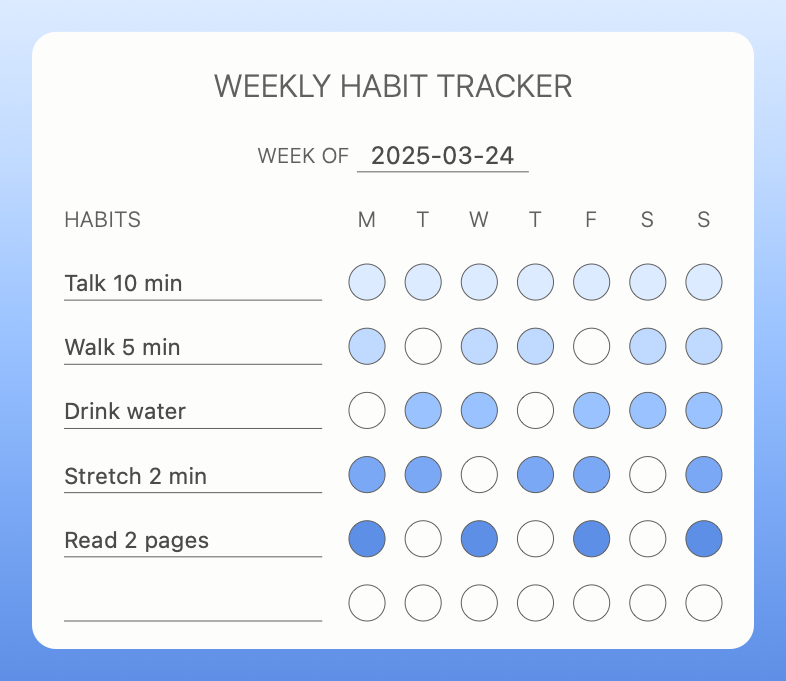
Use the official habit starter kit to write: “When this cue appears, I will do this routine for this reward.” In Color Your Habit, name an observable action such as “Talk 10 min.” Do it when the cue arrives, then color today’s cell. Notice whether the conversation refreshed you. The color records the action; your response shows whether it fits the loop.
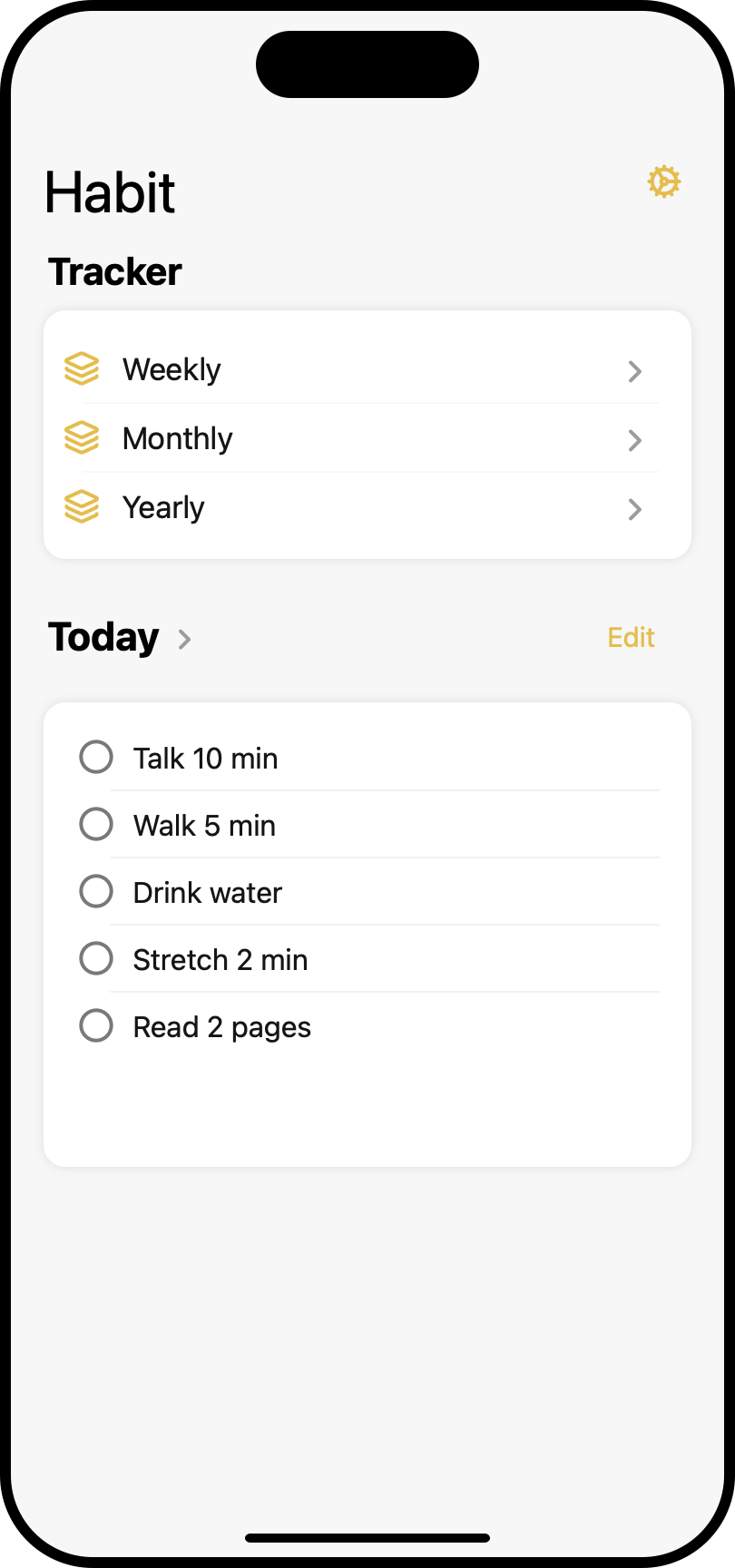
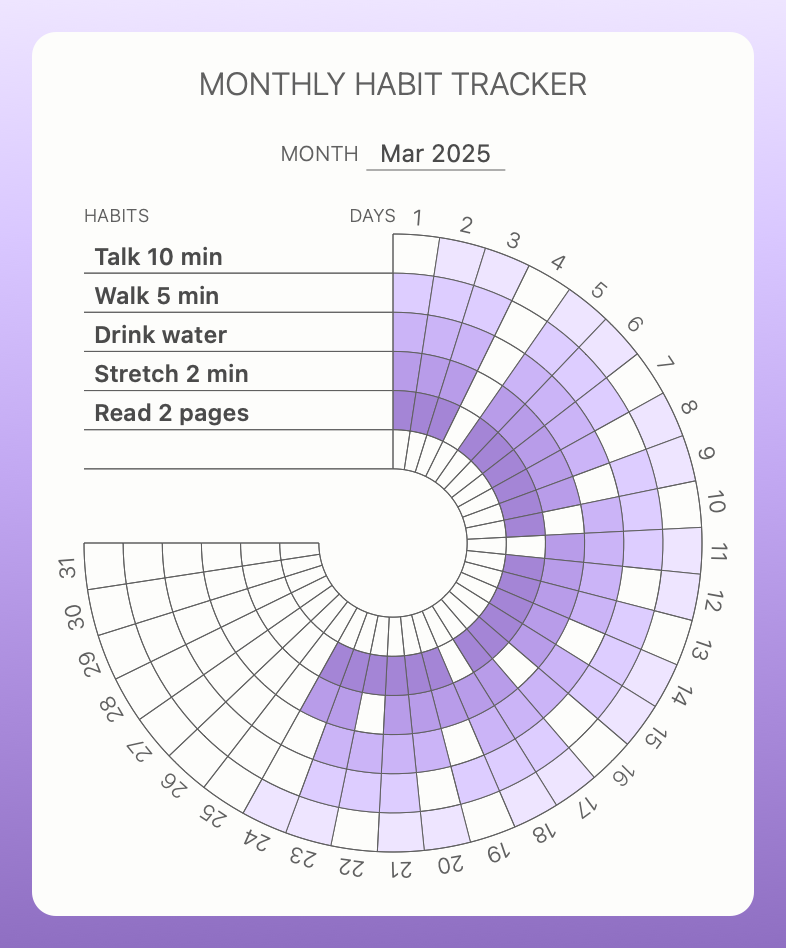
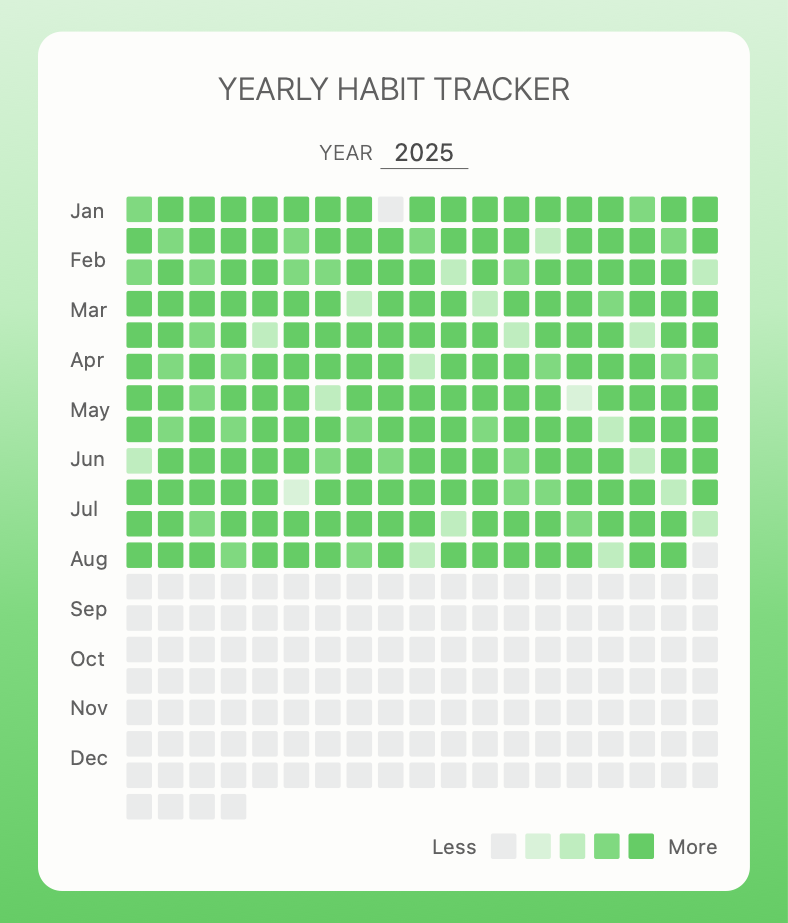
Compare attempted and open days on the weekly canvas. The monthly view can reveal easier weekdays or times, while the yearly view shows changes around travel, busy seasons, or new routines. A short note about the cue and expected reward may explain why the action fit one day and not another. Color Your Habit shows that it happened; it does not prove automation or guarantee changes elsewhere. Use the pattern to refine the loop while keeping rest and important commitments in your life.
Keep the new routine visible with a widget
Even a thoughtful replacement can disappear from mind when an old routine begins. Put the Color Your Habit widget on a Home Screen you already see, and five alternatives such as “Talk 10 min” remain beside this month’s record. When you pick up the phone after lunch or before afternoon work, use it as a quiet checkpoint: what cue is present, and which routine did you plan to try? It is not a warning demanding more willpower. The widget cannot remove the old loop, but it can bring the planned path into view before automatic behavior closes the gap between cue and action.
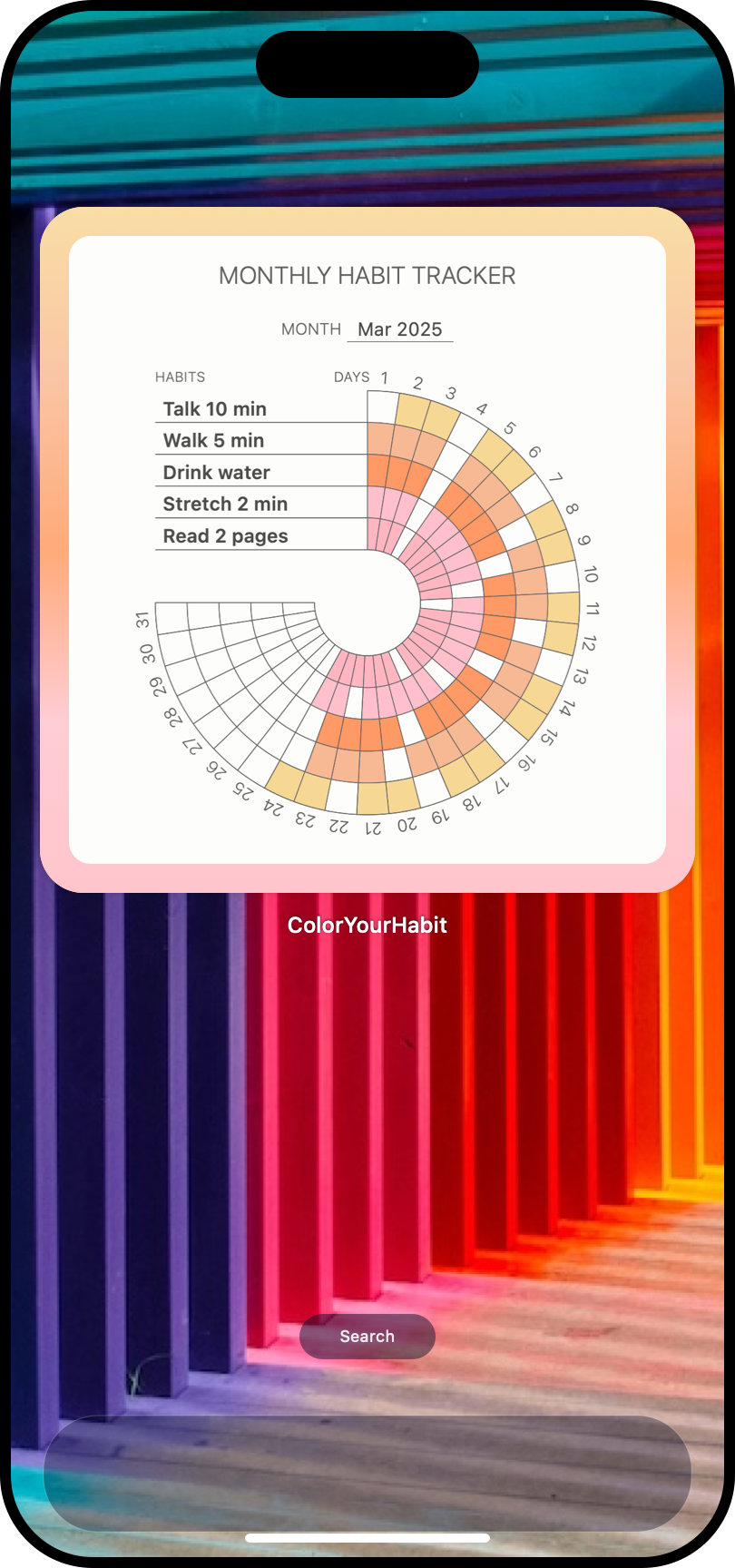
The widget does not mark a routine complete, so color the day in the app only after doing the action. Do not turn an open cell into a verdict or act merely to protect a streak. Ask whether the cue moved, the replacement was too long for a workday, or the reward did not arrive. If you stop noticing the widget, move it to a more relevant Home Screen or shorten the habit name. The aim is not surveillance or pressure. It is a kind reminder of the route you are testing, followed by an honest record of what happened in daily life.
When you miss a day, examine the loop instead of failure
An open cell is information, not proof that you are lazy or unable to change. Ask whether the cue was different, the routine needed more time than the day allowed, or the reward was what you wanted. Do not cram repetitions into a harder session; it changes the experience and teaches little about the original loop. If you misread the cue or reward, observe again. If the action was cumbersome, choose an easier route to the same reward. Duhigg also describes supportive groups as useful when change is difficult, so share the plan with someone you trust if you keep getting stuck. One missed day does not erase the experiment, and many colors don't prove permanent transformation. Choose curiosity, wait for the next cue, and retry.