
How to Apply Atomic Habits
Reading time about 3 min
- Published
In James Clear’s book Atomic Habits: An Easy & Proven Way to Build Good Habits & Break Bad Ones, the most useful idea is not chasing a dramatic goal. It is making the next action tiny, giving it a clear cue, and making the result satisfying to see. Color Your Habit turns those ideas into a simple loop: choose a small action, do it, and color the day.
Start with an action that feels almost too easy
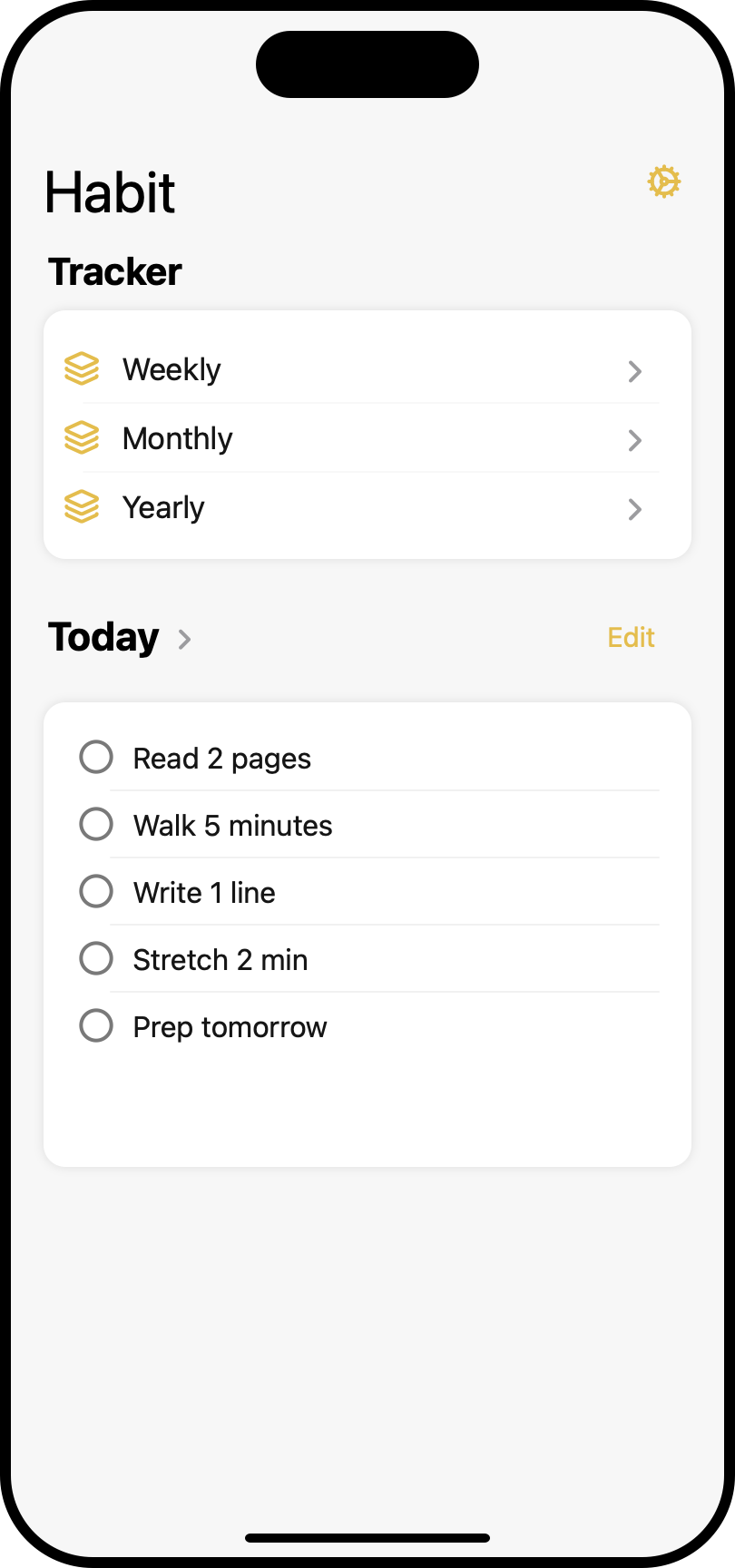
Shrink the habit until starting needs very little motivation. The Two-Minute Rule is a practical guide: read two pages instead of “read more,” walk for five minutes instead of “get fit,” or write one line instead of “keep a journal.” Add that exact action as the habit name. You can always continue, but the minimum still counts.
Attach it to a cue you already have
Habit stacking connects a new action to something that already happens. Pick a cue you can notice without another decision, then use a simple “after this, I do that” rule:
- Read 2 pages after making morning coffee.
- Walk 5 minutes after lunch.
- Write 1 line after closing the laptop.
- Stretch 2 min after brushing your teeth.
- Prep tomorrow before plugging in your phone.

Mark it immediately and enjoy progress from week to year
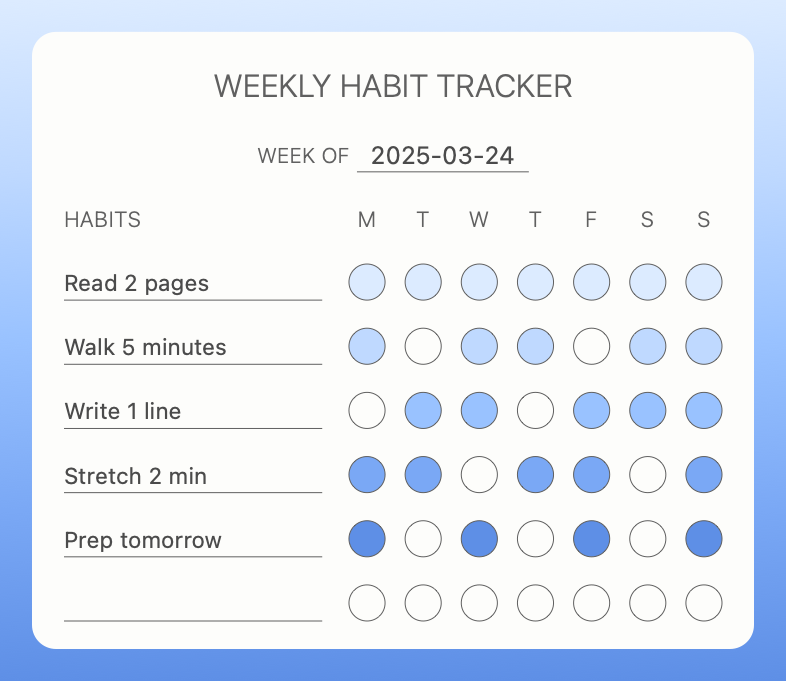
Open Color Your Habit as soon as the action is done and mark today’s cell. Keep habit tracking simple: one colored mark makes the completed action visible.
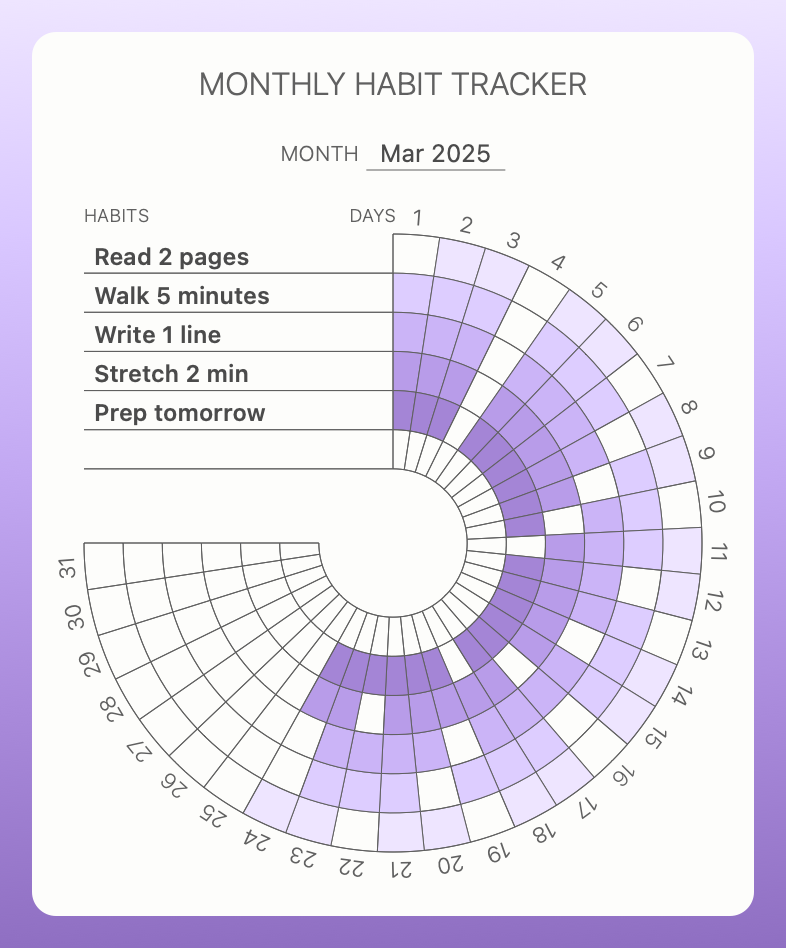
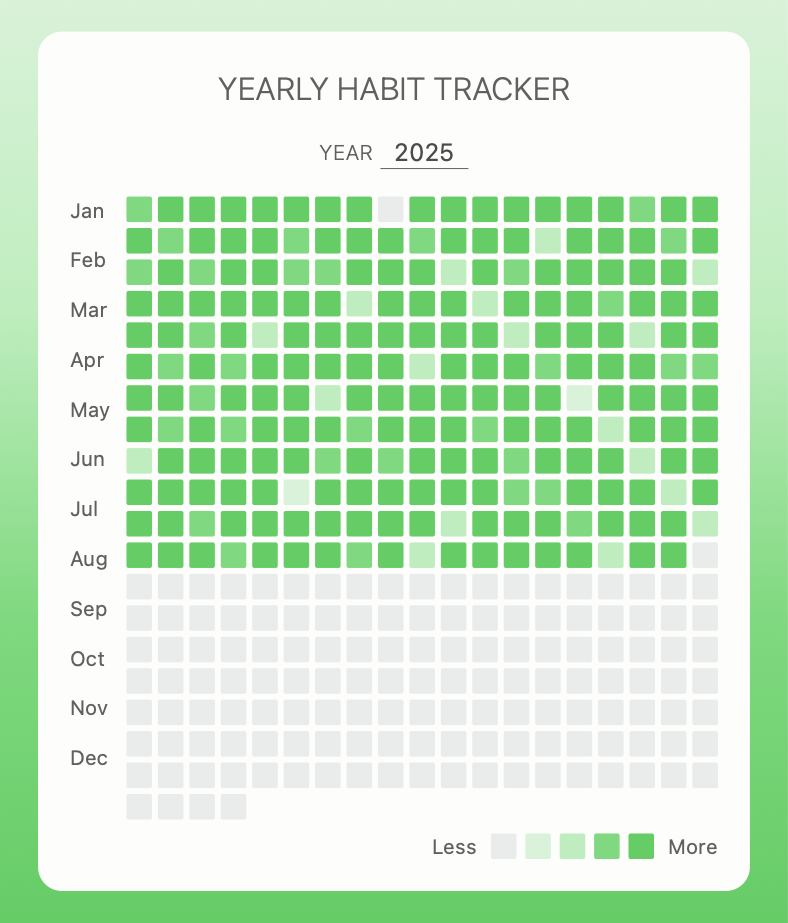
Start with the weekly canvas and enjoy watching each day appear. As the marks accumulate, the monthly canvas reveals a rhythm and the yearly canvas turns tiny actions into a pattern you can see at a glance.
Keep habits in sight with a widget
One practical idea in James Clear’s Atomic Habits is to make the cues for good habits obvious. Put the Color Your Habit widget on your Home Screen, and each time you look at your phone you can see your five tiny habits alongside this month’s record.
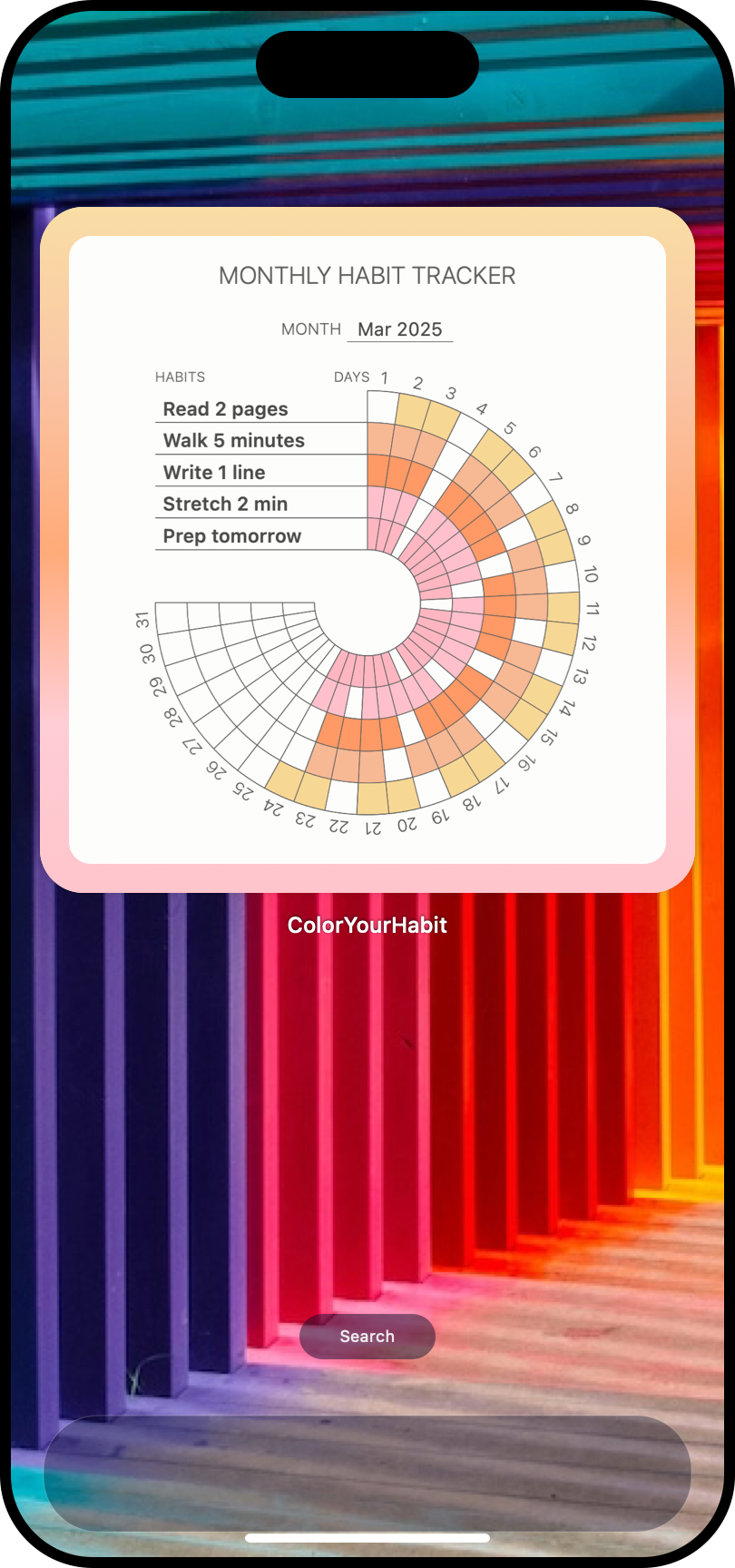
The widget does not mark a habit as complete by itself, but it works as a visual cue: remember today’s action before you forget, then record it in the app when it is done. If you notice an empty cell, use it not as pressure but as a prompt to choose the smallest action you can do now.
Missed a day? Restart small
An empty cell is information, not failure. Keep the original cue and return to the smallest version at the next opportunity. Do not “make up” the missed day with a harder session. One easy repetition restores the loop, and the weekly, monthly, and yearly canvases show progress without demanding perfection.